
Making every physical product
uniquely identifiable.

The systems identifying physical products were never designed for what we're now asking them to do.
Yet regulation, digitalisation and circularity increasingly depend on trusted product identity.
The challenge is no longer just identifying a product. It's knowing the physical product is the one it claims to be.
VUPI focuses on unique, machine-readable product marking that reliably connects an individual physical product with its digital identity.

Unique by Design
Digitalisation at the level of the individual product requires an identity that distinguishes one physical product from another, not simply one model, product type or batch from another.

Machine Readable
Product identity must be reliably readable across products, industries and use cases. New approaches, including AI-based reading of complex physical characteristics, expand capabilities.

Built on Trust
Identification becomes secure when a product's identity can be verified. As physical products are increasingly connected, the integrity of that connection becomes increasingly important.
The physical-digital identity gap.
We are building increasingly sophisticated digital identities for products. But every digital identity ultimately depends on its connection to something physical.
Digital platforms and data infrastructures are increasingly sophisticated, while less attention is given to the product mark itself: the machine-readable connection between an individual physical product and its digital identity.
VUPI works at that point of connection.
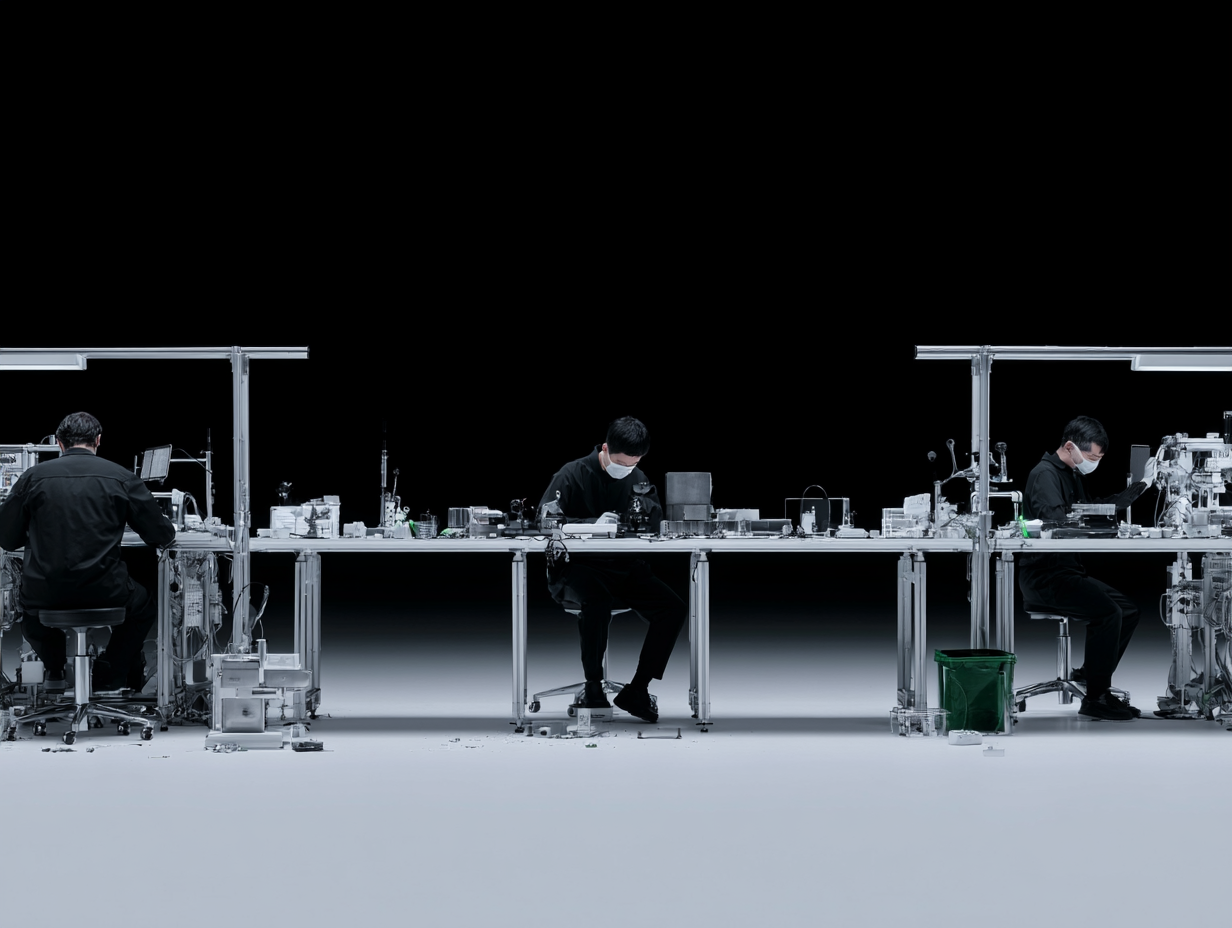
Regulation, technology and industrial digitalisation are converging.

Regulation is Accelerating
European requirements including the Digital Product Passport, Unique Device Identification and pharmaceutical serialisation are increasing the importance of unique product identification, machine-readable data carriers and traceability.

Technology is Advancing
AI-based recognition of complex physical patterns and other smartphone-based technologies are creating new possibilities for persistent, machine-readable physical identity.

Standards Need to Keep Pace
Future-ready, open approaches are needed to bridge regulatory ambition, industrial requirements and emerging technical possibilities.
Identity should create value, not just compliance.
Unique product identity can do more than satisfy regulatory requirements. It can provide the foundation for industrial digitalisation, AI-enabled process optimisation, circular business models, product lifecycle services and new interactions between manufacturers, products and users.
VUPI explores how unique, machine-readable product marking can move from a compliance requirement to value-creating infrastructure.

Independent by structure. Collaborative by design.
VUPI, Value-Creating Unique Product Identity, is an independent think tank bringing together expertise across industry, research, standardisation, law and technology.
Our focus is deliberately narrow: the product mark itself and its machine reading. We develop practical knowledge and good practice without advocating for a particular commercial technology.
.png)